

IN-STORE PRODUCTIVITY & WORKFORCE REDESIGN
Unlocking productivity, service quality and operational control at store level
THE CHALLENGE
Operating 2,500+ stores created structural pressure on operations. Inconsistent workflows, fragmented processes, and weak task planning drove inefficiencies, rising labor costs, and uneven service quality.
Staffing decisions were experience-based rather than demand-driven, with little visibility into how time was spent on the shop floor. This led to large productivity gaps and reactive management.
At scale, these issues caused cost volatility, operational friction, and lower frontline engagement. The lack of a consistent, data-driven operating model made sustainable productivity improvements hard to achieve.
How we can conquer this problem together
OUR APPROACH
1. Analysis
- •Creating end-to-end transparency into store operations across all roles to identify where time and capacity are used without adding value
- •Observing frontline work through structured Gemba walks, time studies, and task breakdowns to uncover execution patterns, friction, and sources of variability
- •Building a shared, evidence-based view of current performance constraints and realistic opportunities for sustainable productivity gains
2. Engineering
- •Converting insights into simple, standardized processes across store functions while removing non-value-adding work and unnecessary handovers
- •Designing control mechanisms that align demand, staffing, and task allocation so planning and daily steering support execution
- •Creating solutions that work in real store conditions, balancing efficiency with practicality and remaining robust under peak demand and staffing variability
3. Pilot
- •Piloting redesigned processes, control routines, and leadership behaviors in live stores to validate feasibility, impact, and acceptance
- •Observing team adoption to identify what sticks and where coaching or adjustments are needed
- •Measuring impact against a clear baseline to show productivity gains, greater stability, and reduced operational noise
4. Scale-up
- •Embedding productivity through governance, KPIs, and daily management so processes, controls, and leadership reinforce each other
- •Building internal capability and ownership so teams and managers can steer performance independently
- •Institutionalizing continuous improvement with learning loops that prevent regression and protect productivity gains over time
THE IMPACT
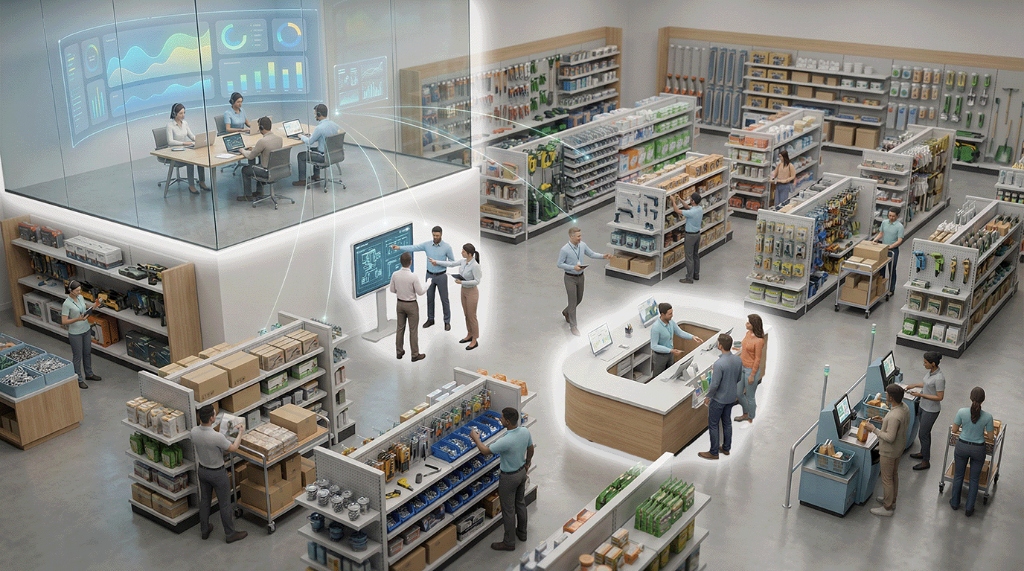
Click on the stations to learn more.
LET'S GET TO WORKProductivity pressure without headcount flexibility?